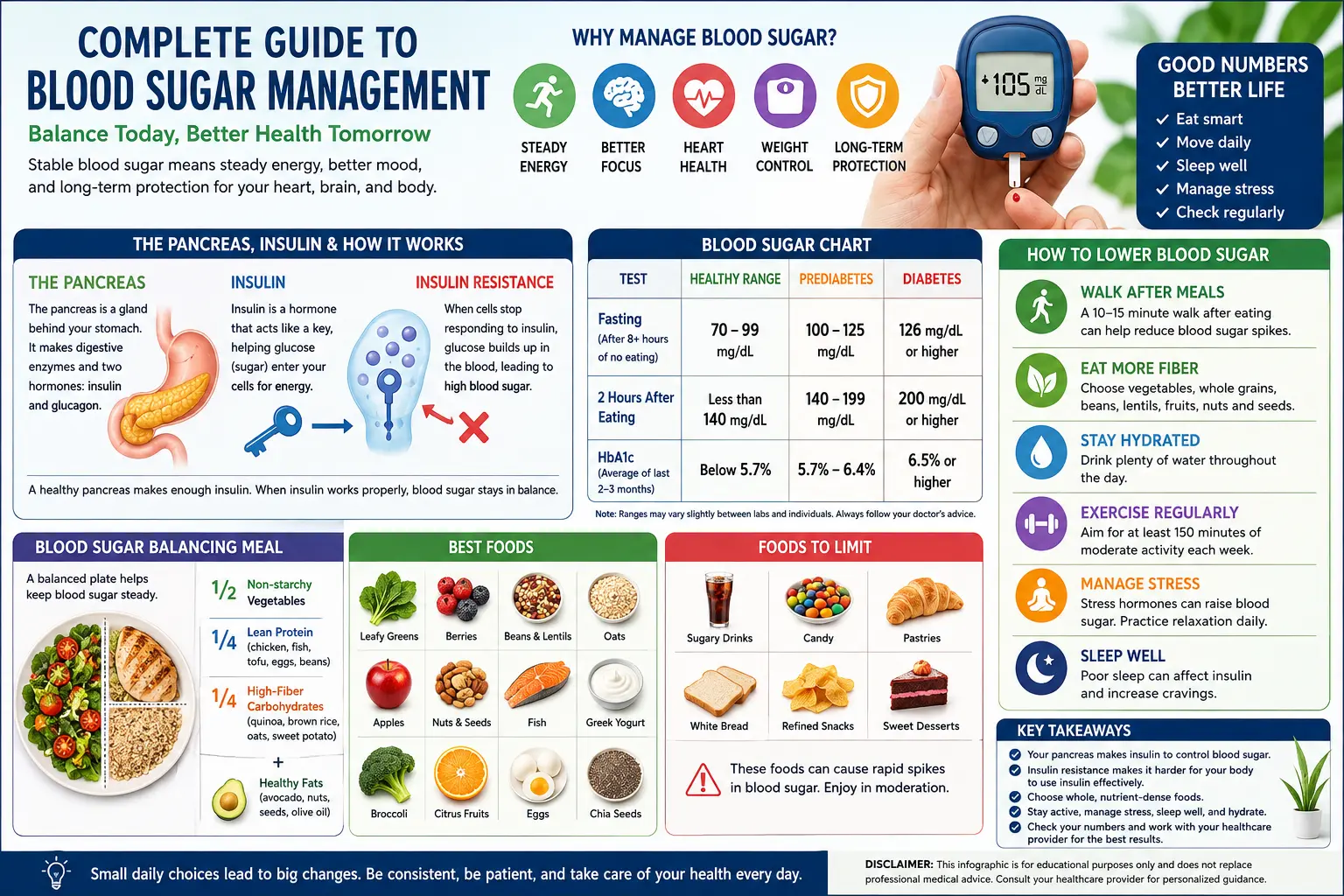




Tips To Healthy blood sugar management
What Is Blood Sugar?
Blood sugar, also known as blood glucose, is the amount of glucose circulating in your bloodstream. Glucose is the body's primary source of energy and comes from carbohydrates found in foods such as fruits, vegetables, grains, dairy products, and legumes.
Your body needs a healthy balance of blood sugar to function properly. When blood sugar remains too high or too low for extended periods, it can affect energy, concentration, mood, and long-term health.
What Is Blood Sugar Management?
Blood sugar management refers to keeping your blood glucose within a healthy range throughout the day. Good blood sugar management helps your body produce consistent energy while supporting your heart, brain, kidneys, nerves, and eyes.
Healthy blood sugar management usually involves:
Eating balanced meals
Regular physical activity
Getting enough sleep
Managing stress
Maintaining a healthy weight
Taking medications if prescribed by a healthcare provider
What Does the Pancreas Do?
The pancreas is a gland located behind your stomach. It plays two important roles:
1. Digestive Function
The pancreas produces enzymes that help digest carbohydrates, fats, and proteins.
2. Blood Sugar Regulation
The pancreas produces two important hormones:
Insulin
Glucagon
Together, these hormones help keep blood sugar within a healthy range.
What Is Insulin?
-Insulin is a hormone made by the pancreas.
-Its main job is to move glucose from your bloodstream into your body's cells, where it is used for energy.
-Think of insulin as a key.
-Without insulin, glucose stays in the bloodstream instead of entering your cells.
When insulin works properly:
✔ Cells receive energy
✔ Blood sugar remains balanced
✔ The body functions efficiently
What Is Insulin Resistance?
Insulin resistance occurs when your body's cells stop responding normally to insulin.
Your pancreas then produces more insulin to compensate.
Over time, the pancreas may struggle to keep up, causing blood sugar levels to rise.
Insulin resistance is one of the major risk factors for developing prediabetes and type 2 diabetes.
Signs of Insulin Resistance
Many people have insulin resistance without knowing it.
Possible signs include:
Increased belly fat
Constant hunger
Sugar cravings
Fatigue after meals
Difficulty losing weight
High triglycerides
Darkened skin around the neck or underarms (in some people)
Elevated fasting blood sugar
Blood Sugar Chart
Understanding your numbers is an important part of blood sugar management.
Blood Sugar Test Healthy Range
Fasting 70–99 mg/dL
Prediabetes 100–125 mg/dL
Diabetes 126 mg/dL or higher (confirmed by repeat testing)
Two hours after eating Less than 140 mg/dL
HbA1c Below 5.7%
These ranges are general guidelines. Your healthcare provider may recommend different targets based on your individual health.
How to Lower Blood Sugar Naturally
Many people ask how to lower blood sugar safely and naturally. While treatment depends on the underlying cause, healthy daily habits can support normal blood sugar regulation.
1. Walk After Meals
One of the simplest strategies is taking a 10–15 minute walk after eating.
Light activity helps your muscles use glucose for energy and may reduce post-meal blood sugar spikes.
2. Eat More Fiber
Foods rich in fiber slow digestion and help the body absorb glucose more gradually.
Good sources include:
Oats
Lentils
Beans
Apples
Pears
Broccoli
Chia seeds
Psyllium husk
3. Stay Hydrated
Drinking enough water supports normal body functions and may help maintain healthy blood sugar levels.
Choose:
Water
Sparkling water (unsweetened)
Herbal tea
Limit sugary beverages whenever possible.
4. Get Regular Exercise
Exercise increases your muscles' ability to use glucose.
Helpful activities include:
Walking
Cycling
Swimming
Strength training
Yoga
Aim for at least 150 minutes of moderate exercise each week, if appropriate for you.
5. Manage Stress
Stress hormones such as cortisol can affect blood sugar regulation.
Helpful stress-management techniques include:
Deep breathing
Meditation
Walking outdoors
Stretching
Spending time with family and friends
6. Sleep Well
Poor sleep can affect insulin sensitivity and appetite.
Adults should generally aim for 7–9 hours of quality sleep each night.
What Is a Blood Sugar Balancing Meal?
A blood sugar balancing meal includes foods that provide steady energy while helping prevent rapid spikes and crashes.
A simple method is to divide your plate into sections:
½ non-starchy vegetables
¼ lean protein
¼ whole grains or other high-fiber carbohydrates
Include a source of healthy fat, such as:
Avocado
Nuts
Seeds
Olive oil
This combination helps slow digestion and supports steady glucose absorption.
Blood Sugar Balancing Meal Ideas
Breakfast
Oatmeal with chia seeds and berries
Greek yogurt with nuts
Vegetable omelet with whole-grain toast
Lunch
Grilled chicken salad
Lentil soup
Brown rice with vegetables and tofu
Dinner
Baked salmon
Steamed broccoli
Quinoa
Mixed salad
Healthy Snacks
Apple with peanut butter
Mixed nuts
Cottage cheese
Hummus with vegetables
Plain yogurt
Foods That Support Healthy Blood Sugar
Many nutritious foods can be part of a balanced eating pattern.
Examples include:
Leafy greens
Broccoli
Cauliflower
Beans
Lentils
Chickpeas
Oats
Apples
Berries
Citrus fruits
Nuts
Seeds
Greek yogurt
Eggs
Fish
Chicken
Foods to Limit
Some foods may cause larger blood sugar spikes when eaten in excess.
Examples include:
Sugary drinks
Candy
Cakes
Pastries
White bread
Refined cereals
Sweetened desserts
Highly processed snack foods
Rather than eliminating foods completely, many people benefit from moderation and portion awareness.
Frequently Asked Questions
Can blood sugar return to normal?
In some people with prediabetes, healthy lifestyle changes can help bring blood sugar back into the normal range. People with diabetes should work with their healthcare provider to determine appropriate treatment goals.
Does drinking water lower blood sugar?
Water does not directly lower blood sugar, but staying well hydrated supports normal body functions and overall health.
Is walking better than running?
Both are beneficial. Walking is often easier to maintain consistently and may be especially helpful after meals.
Can stress increase blood sugar?
Yes. Stress hormones can temporarily increase blood sugar levels, making stress management an important part of overall wellness.
Why is my blood sugar high in the morning?
Some people experience a natural early-morning rise in blood sugar due to hormones released before waking. This is often called the "dawn phenomenon." If morning readings are consistently high, discuss them with your healthcare provider.
Can I eat fruit?
Yes. Whole fruits provide vitamins, minerals, antioxidants, and fiber. Portion size and the overall balance of the meal are important.
Is oatmeal good for blood sugar?
Unsweetened oatmeal is rich in soluble fiber and can be part of a balanced meal, especially when paired with protein or healthy fats.
What is the best diet for blood sugar management?
There is no single best diet for everyone. Many people benefit from eating more vegetables, whole grains, legumes, lean proteins, healthy fats, and high-fiber foods while limiting highly processed foods and added sugars.
Key Takeaways
Healthy blood sugar management supports long-term wellness.
The pancreas produces insulin, which helps move glucose into cells.
Insulin resistance can make it harder for the body to regulate blood sugar.
A balanced diet, regular exercise, quality sleep, hydration, and stress management all play important roles.
A blood sugar balancing meal combines fiber-rich carbohydrates, lean protein, healthy fats, and vegetables for steady energy.
Understanding your blood sugar chart can help you interpret common glucose and HbA1c values, but any concerns about your readings should be discussed with a qualified healthcare professional.
Medical Disclaimer: This article is for educational purposes only and is not a substitute for professional medical advice, diagnosis, or treatment. If you have symptoms of diabetes or concerns about your blood sugar levels, consult a qualified healthcare professional.